Best Time to Fertilize Lawns in Grand Rapids, MI
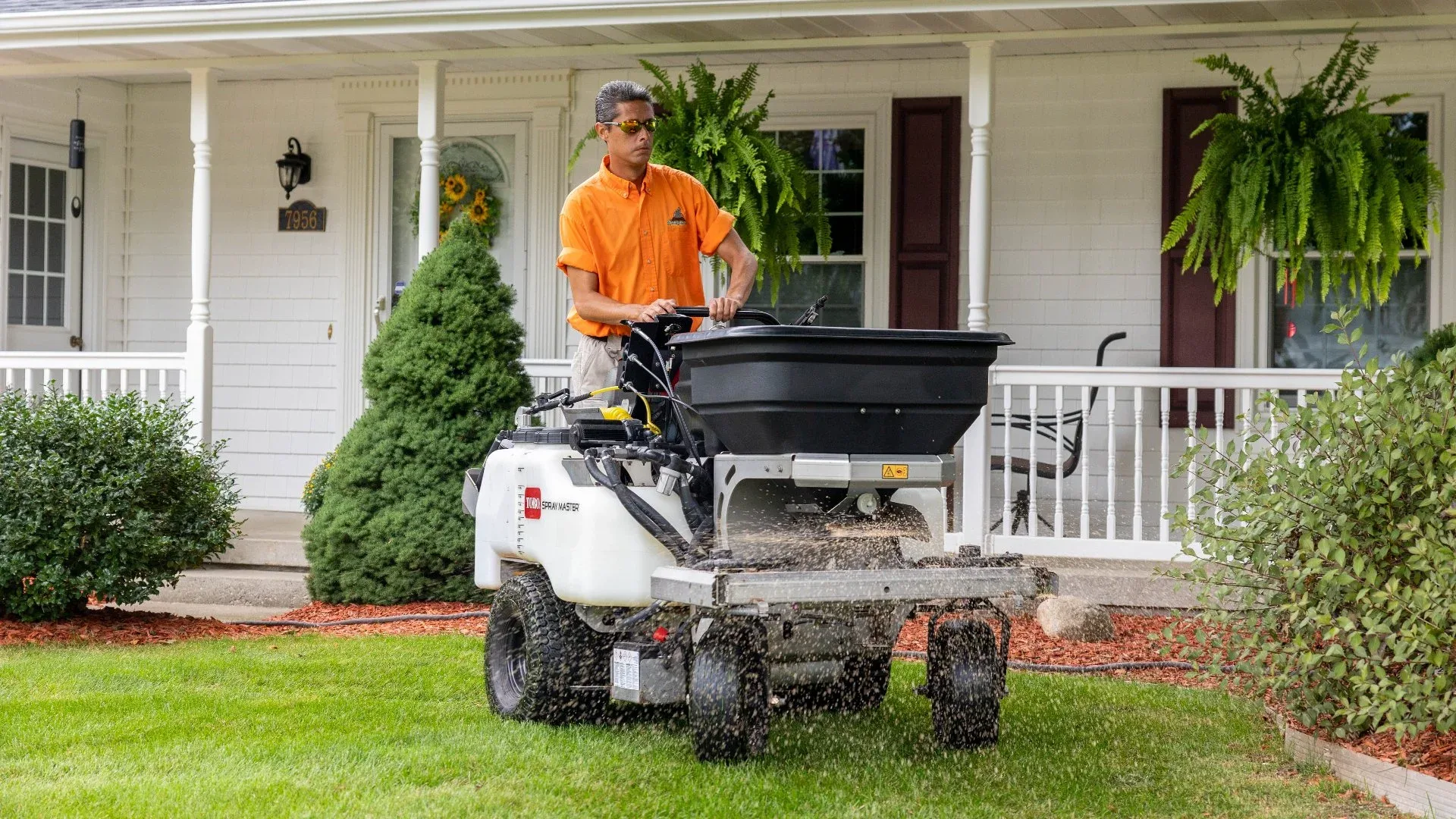
If your lawn looks tired every July, the best time to fertilize lawn in Grand Rapids usually is not when the damage shows up. For most yards in West Michigan, the strongest feeding windows land in late spring and, even more importantly, early fall, when cool-season grass actually wants to grow.
Best time to fertilize a lawn in grand rapids, MI
The short answer is simple: in Grand Rapids, the best times to fertilize are usually late spring and early fall. Early fall is the standout window. That is when your lawn can recover from summer stress, thicken up, and store energy for winter instead of just pushing a burst of soft top growth.
That timing fits the way most local lawns behave. After a long West Michigan winter, grass wakes up slowly. Then summer brings heat, dry spells, and patches that look rough by August. Feeding at the right moments helps your lawn use the fertilizer, instead of just surviving it.
Why timing matters more than just buying fertilizer
Fertilizer is basically food for your lawn, but food only helps when your grass is ready to eat. If your lawn is half asleep in cold soil, or struggling through hot, dry weather, fertilizer will not fix the underlying problem. It is a little like stocking the fridge right before leaving town. The timing is off, so the benefit is smaller than you hoped.
Grand rapids lawns are usually cool-season lawns
Most lawns in Grand Rapids are made up of cool-season grasses such as Kentucky bluegrass, perennial ryegrass, and fescues. In plain English, that means your grass grows best when the weather feels good to you too: cool mornings, mild afternoons, and decent moisture.
That matters because cool-season grass has two main growth surges, one in spring and one in fall. Those are the windows when fertilizer does the most good. Outside those windows, especially in high summer, your lawn often slows down or goes stressed and dull.
West michigan weather changes the calendar
Here’s the thing: the calendar helps, but local weather makes the real call. A warm spring can move things up. A cold, dragging spring can delay green-up by a couple of weeks. Early fall can stay lush and easy, or turn dry fast.
In Grand Rapids, a yard often starts waking up around the same time tulips begin showing color at Frederik Meijer Gardens. That is a better clue than blindly circling a date every year. Lake-influenced weather, spring rain, summer dry stretches, and early frost all shift your fertilizing window a bit.
The best times to fertilize through the year
Once you understand how cool-season grass grows, the yearly schedule makes a lot more sense.
Early spring: go light and don’t rush
Early spring can work for a light feeding, but only if your lawn is truly active. The mistake is jumping too early because you had two sunny afternoons in March. If the soil is still cold and your grass is just barely greening up, a heavy application is usually wasted.
A better sign is steady growth. If your lawn is greening evenly and starting to need regular mowing, a light spring feeding can give it a useful boost.
Late spring: a good feeding window
Late spring is often a better spring feeding window in Grand Rapids. By then, your lawn is actively growing and can actually use the nutrients you put down. For many yards, this lands in May, sometimes into early June depending on the season.
This is also when weed control often enters the picture. But even if you are using a weed-and-feed product, growth conditions still matter more than the bag sitting in the garage.
Summer: usually not the best time
Summer is usually not the best time to fertilize lawns in Grand Rapids. That is the direct answer.
When heat and drought settle in, cool-season grass often shifts into survival mode. Feeding hard during that stretch can create more stress, not less. A light, carefully timed treatment can make sense on irrigated turf that is still actively growing, but most lawns are better off waiting.
Early fall: the best overall time
If you remember one thing, remember this: early fall is the best overall time to fertilize a lawn in Grand Rapids.
Cooler air, warm soil, and returning moisture create ideal growing conditions. Your lawn can repair summer damage, fill in thin areas, and build stronger roots. Think of it as the most productive season for lawn recovery. September is often the money month.
Late fall: the “winterizer” timing
Late fall brings the winterizer window. A winterizer is just a late-season feeding applied after top growth slows down but before the ground freezes.
The point is not to force a bunch of fresh blades right away. The point is to help the lawn store energy in the roots and crowns, which supports a healthier start the following spring.
How to tell your lawn is ready for fertilizer
Dates are helpful, but your lawn tells the truth.
Look for active growth, not just warmer air
Your lawn is ready when it is growing, not when the forecast looks cheerful for a weekend. If you are mowing regularly and the grass is filling in evenly, that is a good sign.
If green-up is patchy and growth is sluggish, hold off. Warmer air alone is not enough.
Check moisture before you spread
Try to fertilize when the soil has some moisture and the weather looks mild. Light rain soon after an application can help move nutrients into the soil.
The catch is heavy rain. If a strong storm is on the way, fertilizer can wash away before your lawn gets much benefit. Bone-dry soil is also a bad setup.
Skip applications when the lawn is stressed
Stressed grass usually looks dull gray-green, folded, thin, crunchy, or flat-out brown. That lawn does not need more food first. It needs relief from the stress.
Fertilizer is not a rescue move for drought dormancy, insect damage, or compacted soil. Putting product down on a struggling lawn often turns into wasted money.
What fertilizer works best for grand rapids lawns
You do not need to turn this into a chemistry project. A few basics go a long way.
Slow-release fertilizer is usually the safer bet
Slow-release fertilizer feeds your lawn gradually over time. For cool-season lawns, that is usually the safer and steadier choice.
Instead of a quick surge of dark green growth followed by a slump, you get a more even response. That is easier on the grass and easier on your mowing schedule.
Know what the numbers on the bag mean
The three numbers on a fertilizer bag stand for nitrogen, phosphorus, and potassium. Nitrogen is usually the main nutrient that drives green growth and color in an established lawn.
Phosphorus matters more for root development, and potassium supports overall plant function. For most established Grand Rapids lawns, nitrogen is the number getting most of the attention.
Starter fertilizer vs. regular lawn fertilizer vs. winterizer
Starter fertilizer is for new seed. It is built to support early root development.
Regular lawn fertilizer is for established turf during the active growing season. Winterizer is for that late-fall feeding window, when the goal shifts from visible top growth to stored energy for winter and spring green-up.
Common fertilizing mistakes to avoid
Most lawn fertilizing problems are timing problems in disguise.
Fertilizing too early in spring
Too-early spring feeding often pushes flashy top growth before your lawn is fully ready. That can mean weaker results later, plus more mowing when the roots still need to catch up.
Fertilizing before a downpour
Light rain is helpful. A downpour is not. Heavy rain can move fertilizer off your lawn and into the street or storm drains, which means less benefit for your yard and more waste.
Putting too much down
More is not better. Too much fertilizer can burn grass, increase disease pressure, and leave you with fast, weak growth that looks good for about a minute and then turns into a hassle.
Using one national schedule for every yard
A generic lawn schedule made for Tennessee or even southern Michigan can miss the mark in Grand Rapids. Your yard’s sun exposure, soil, irrigation, and grass mix can shift timing by a week or two. Local conditions matter.
A simple fertilizer schedule for grand rapids, MI
You do not need a complicated plan to get a better lawn.
2-application Schedule for a basic healthy lawn
For a healthy, established lawn, two applications often do the job well: one in late spring and one in early fall. If you only care about doing the most effective minimum, that is the schedule to copy.
3- To 4-application schedule for a more polished lawn
If you want stronger color, better density, and faster recovery, a fuller plan can include a light spring feeding, a late spring or early summer application, an early fall feeding, and a late-fall winterizer. Early fall still does the heaviest lifting.
When newly seeded lawns follow a different plan
Newly seeded lawns play by different rules. Fresh seed usually gets starter fertilizer, then follows a separate timeline as the grass establishes.
That matters in West Michigan because overseeding in early fall is common and often works really well. Seed and fertilizer timing need to match that younger lawn stage, not an established turf schedule.
Questions people usually ask about lawn fertilizing
Is spring or fall better for lawn fertilizer?
Fall is usually better for cool-season lawns in Grand Rapids. Spring still has a place, but early fall is the stronger feeding window.
What month is best to fertilize a lawn in grand rapids?
May is often a good target for a spring feeding, and September is usually the most important month of the year. Weather can shift both windows a bit.
How often should you fertilize?
Many lawns do well with two applications a year. A more polished lawn often gets three to four.
Should you fertilize before rain?
Before light rain, yes. Before a heavy storm, no. The trick is helpful moisture, not runoff.
What should you try first if your lawn looks weak?
If your lawn looks weak, try one smart change first: time your next feeding for active growth in early fall. For a lot of Grand Rapids lawns, that single adjustment makes the biggest visible difference.
- Disclaimer: This article is for general informational purposes only. It is not professional advice, a quote, or a service agreement. Conditions at your home or property may differ; contact a qualified professional for an on-site evaluation before making repair, safety, or spending decisions.
Disclaimer: This article is for general informational purposes only. It is not professional advice, a quote, or a service agreement. Conditions at your home or property may differ; contact a qualified professional for an on-site evaluation before making repair, safety, or spending decisions.
Need Professional Help?
Our experienced team is ready to help you achieve the lawn of your dreams. Contact us today for a free estimate!