Crabgrass in Thin Spots Along Brick Edges
Edge warmth on clay suburban lots
Brick and paver edges store afternoon heat and dry the first six inches of turf faster than the open backyard. Cool season grass thins there while crabgrass germinates when soil temperatures climb in late spring.
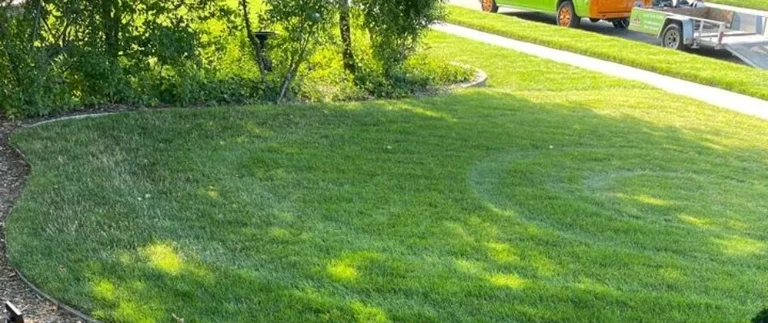
Hybrid bluegrass blends may hold density in center panels yet show pale wedges along returns that warmed first after snow melt. Color differences along hardscape are microclimate signals, not proof of total program failure.
Jenison and Wyoming lots with south facing drives often show escapes only on the sun blasted ribbon while north beds stay thick. Photograph those arcs before treating the entire property as one uniform zone.
West Michigan glacial clay, lake effect moisture, and cool season turf change how the same symptom looks from one Grand Rapids suburb to the next. Photograph sun bands, irrigation overlap, and recent traffic before you lock a product choice. Tuff Turf aligns lawn care, pest control, and animal control across Kent, Ottawa, and Allegan counties from field evidence on real residential lots.
Separating crabgrass from poa and disease
Smooth and large crabgrass display prostrate stems, membranous ligules, and seed heads by late summer. Summer patch and drought fold on bluegrass follow different timing and lack crabgrass seed stalks.
Low mowing that scalps edges exposes soil and accelerates crabgrass establishment. Compare mower height on parkway strips versus interior turf before blaming pre emergent timing alone.
Structured weed control plans name product class and timing; they do not erase mechanical stress that keeps edges open on Michigan clay.
West Michigan glacial clay, lake effect moisture, and cool season turf change how the same symptom looks from one Grand Rapids suburb to the next. Photograph sun bands, irrigation overlap, and recent traffic before you lock a product choice. Tuff Turf aligns lawn care, pest control, and animal control across Kent, Ottawa, and Allegan counties from field evidence on real residential lots.
Pre emergent windows on cool season turf
Crabgrass pre emergent success depends on application timing relative to soil warmth and subsequent disturbance. A wet cool spring can delay germination while warm April days on brick edges still open early windows.
Split applications on large properties sometimes miss narrow heat zones along returns if spreaders turn before the edge receives full rate. Overlap marks on brick help technicians see where chemistry stopped short.
Organic minded programs face the same edge layout with different tools. Density, height, and irrigation still decide whether annual grasses find soil by July.
West Michigan glacial clay, lake effect moisture, and cool season turf change how the same symptom looks from one Grand Rapids suburb to the next. Photograph sun bands, irrigation overlap, and recent traffic before you lock a product choice. Tuff Turf aligns lawn care, pest control, and animal control across Kent, Ottawa, and Allegan counties from field evidence on real residential lots.
Irrigation and splash patterns
Downspout discharge and misaligned heads soak some edges while center turf thirsts. Crabgrass tolerates brief drought after establishment better than stressed bluegrass on the same narrow band.
Daily short cycles train shallow roots on edges already heat stressed. Depth and spacing matter more than total minutes when clay sheds water across compacted returns.
Note whether crabgrass follows a gutter leak or irrigation overspray line before increasing fertilizer on panels that lack density because moisture is wrong, not because feed failed.
Fall density recovery on edge panels
Late summer crabgrass seed heads add to the seed bank even after plants die with frost. Early fall aeration and overseed on cool season turf can thicken arcs when soil contact and water hold on clay.
Seed without relieving compaction on packed returns often fails on the same stripe the following July. Aeration timing should respect active growth and guest use on drive lanes.
Plan core aeration and overseed with lawn fertilization rhythm through contact when edges repeat the same escape map two seasons in a row.
Realistic expectations on high traffic returns
Mail delivery, trash carts, and daily mower pivots at brick corners keep micro zones thin even with solid programs. Targeted cultural work may beat annual wholesale reset on those panels.
Uncertainty stays when crabgrass and drought stress overlap on the same sun blasted arc. Weekly edge photos through August clarify cause faster than August panic from the driveway view.
West Michigan glacial clay, lake effect moisture, and cool season turf change how the same symptom looks from one Grand Rapids suburb to the next. Photograph sun bands, irrigation overlap, and recent traffic before you lock a product choice. Tuff Turf aligns lawn care, pest control, and animal control across Kent, Ottawa, and Allegan counties from field evidence.
Disclaimer: This article is for general informational purposes only. It is not professional advice, a quote, or a service agreement. Conditions at your home or property may differ; contact a qualified professional for an on-site evaluation before making repair, safety, or spending decisions.
Need Professional Help?
Our experienced team is ready to help you achieve the lawn of your dreams. Contact us today for a free estimate!