Holiday Lighting Should Be Planned Around Gutters, Trees, Snow, and Spring Lawn Recovery
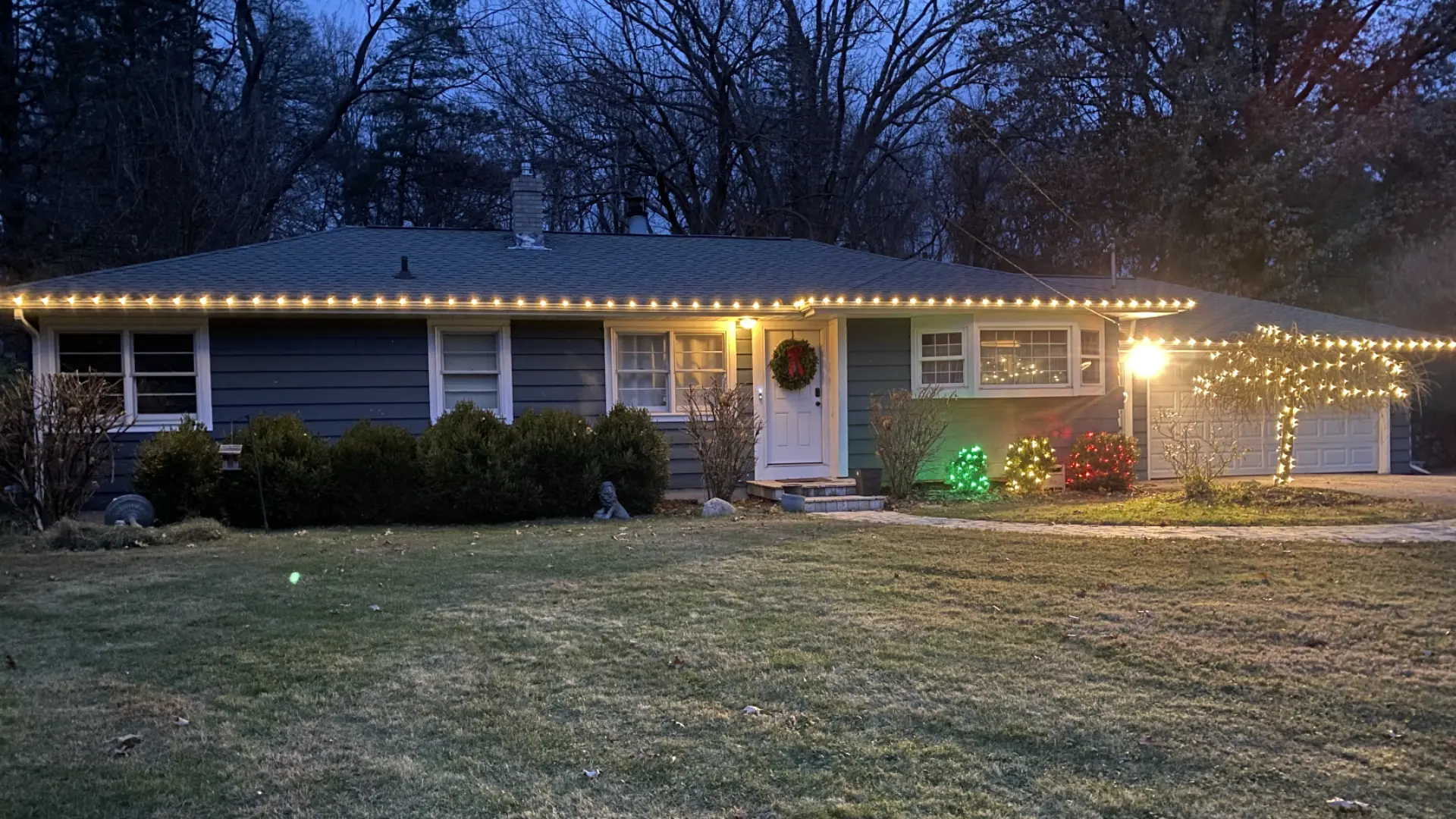
Holiday lighting looks simple in October photos and complicated once gutters, tree limbs, snowplows, and spring lawn recovery enter the same plan. Tuff Turf Mole Busters installs holiday lighting across the Grand Rapids and Holland area. The best displays are designed around how the property actually works from late fall through spring, not only around how it photographs on one clear night.
Clips, cord routes, and timer locations should respect roof edges, plant growth, and the path the plow or shovel will take all winter. A strand that looks tidy in November can sag into a walkway after the first heavy snow or tear needles on a tree that still needed room to move in wind.
Map gutters and roof edges before ordering lights
Walk the eaves with a notepad. Mark downspouts, loose sections, and places where a ladder cannot stand safely. Gutter clips need sound metal or a planned alternative. If a section of gutter is already pulling away, fix that before hanging weight on it. Note which sides face the street and which sides only the family sees so the densest lighting lands where it matters.
Keep transformer and timer locations out of plow splash and away from the busiest door if cords would create a trip line under snow. Photograph the roofline in daylight so the install crew is not guessing from memory after dark.
Give trees and shrubs a lighting plan that protects growth
Wrapping every trunk tightly may look bright in December and leave girdling marks or broken twigs in March. Decide which trees are structural accents and which shrubs should only get gentle outline light. Leave slack for wind and for branches that still move under ice. Avoid driving staples into thin bark when clips or removable fasteners can do the job.
If a tree needs pruning for clearance or storm readiness, schedule that conversation before the lights go up. Our wider services list stays separate from lighting, but the calendar should not put a hard prune the week after a dense wrap without a plan.
Protect snow routes and spring turf
Mark the plow path, shovel piles, and where roof snow slides. Cords across those zones get cut or buried. Stake markers so winter crews see the low runs. Along lawn edges, avoid pinning wires so tight that spring core aeration or lawn rolling becomes a wire hunt. Note irrigation heads near display edges so spring startup does not snag a forgotten stake.
Salt and sand splash dulls fixtures near drives. Choose placements that still read from the street without sitting in the splash zone every storm.
Plan take down and lawn recovery together
The install date gets all the attention. The take down date protects the lawn. Removing lights before soft spring soils turn to ruts keeps foot traffic off wet turf. Walk the property after removal and note any compressed edges along the display path. Those strips may need rest, seed, or a note in the lawn care program rather than another bag of product for unrelated reasons.
If moles or winter traffic already stressed a strip near the lighted walk, photograph it before spring growth hides the pattern. Animal control and lawn recovery stay separate services with mole control when ridges appear, but the lighting calendar should not create a third scar on the same band.
Extension cords and GFCI reality
Outdoor rated cords, GFCI protection, and load limits are part of a safe display. Do not daisy chain light duty cords across wet soil to reach a distant outlet. Ask where power will come from before the design assumes a plug that does not exist. A clean lighting plan includes the electrical path, not only the roofline sketch.
Timers, neighbors, and HOA expectations
Set on and off times that respect neighbors and any HOA rules before the display goes live. A bright facade that stays on until dawn creates complaints that have nothing to do with install quality. Document the timer location and who can adjust it during travel weeks. If a storm knocks out power, know how the display behaves when power returns so it does not stay dark through a holiday weekend or run at noon after an outage.
What to send before we design the display
Send daylight photos of the front elevation, a sketch of plow and walk routes, notes on trees you want featured, timer preference, and any known gutter issues. Mention spring projects already booked so take down does not collide with aeration week. Read more on the blog, then contact Tuff Turf at (616) 554-9499.
Holiday lighting should feel intentional in December and invisible in its damage by spring. Plan gutters, trees, snow, and lawn recovery as one property map.
Need Professional Help?
Our experienced team is ready to help you achieve the lawn of your dreams. Contact us today for a free estimate!