Lawn Rolling and Core Aeration Solve Different West Michigan Lawn Problems
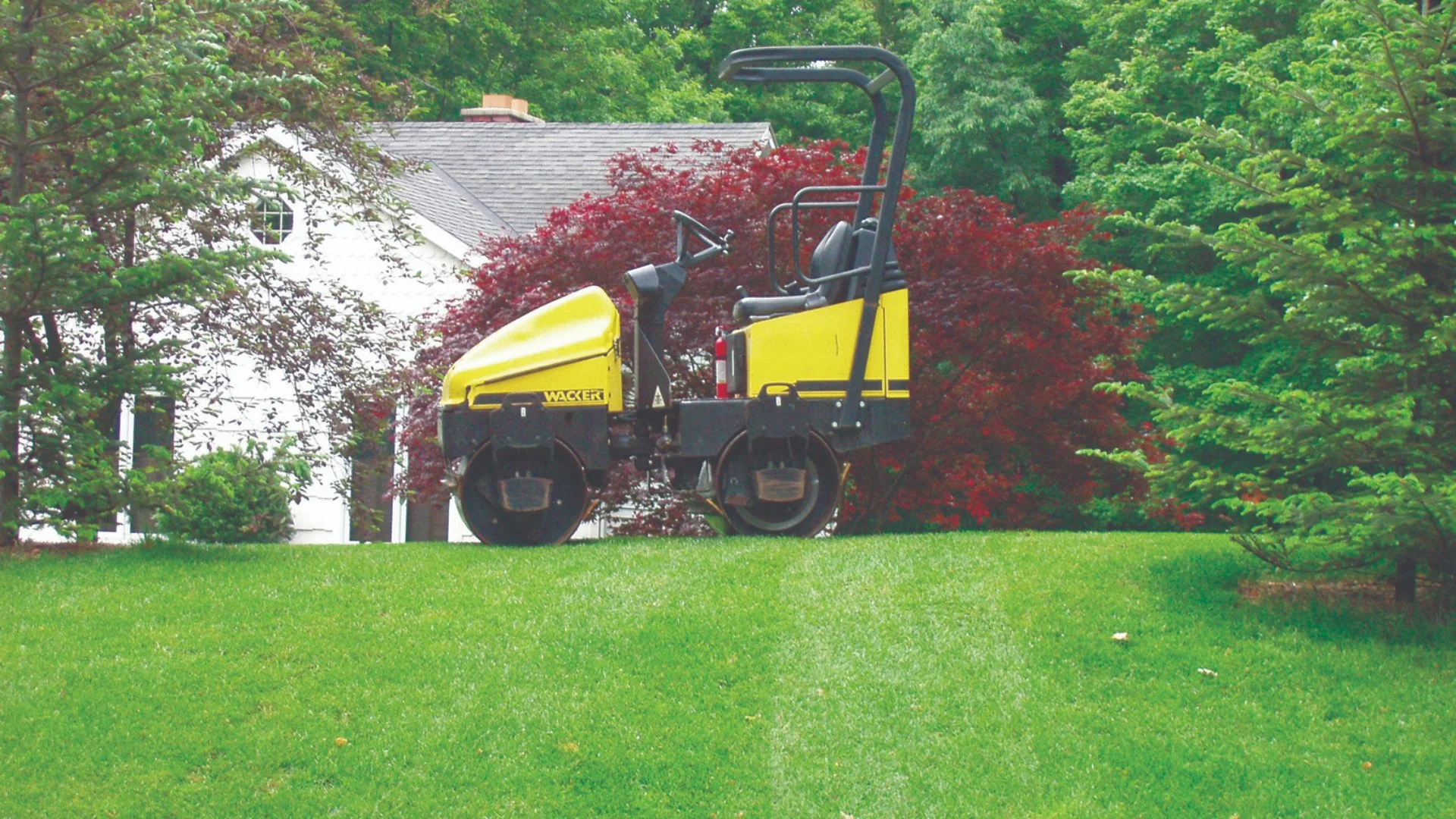
Rolling presses the lawn surface down. Core aeration opens the soil by removing plugs. Those actions may be recommended for the same property, but they are not interchangeable.
Tuff Turf Mole Busters offers spring lawn rolling with a 3,000-pound roller to smooth bumps, frost heaving, mole tunnels, and ruts. We also warn that rolling can compact soil and recommend following it with core aeration when appropriate. The lawn should be evaluated before either machine crosses it.
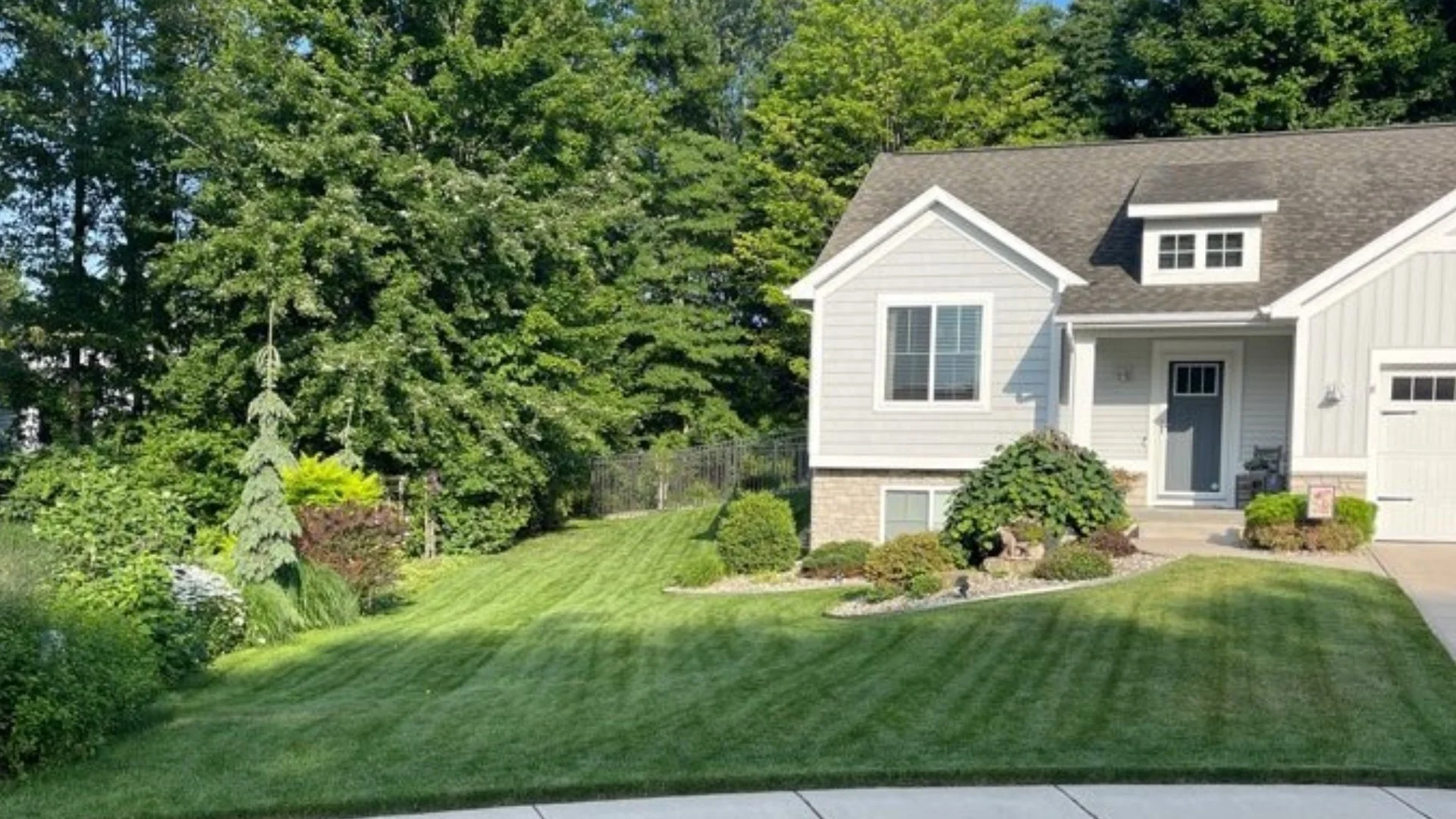
Rolling is aimed at raised surface conditions
West Michigan freeze and thaw cycles can leave portions of turf lifted or uneven after winter. Mole tunnels can also push narrow sections of the lawn upward. Tires, equipment, or other disturbance may create ruts and irregular transitions. Rolling may be considered when the lawn contains frost-heaved bumps, raised mole tunnels, shallow ruts, an uneven turf surface, minor lifted sod, a rough mowing surface, or small raised sections after winter. The roller presses those high areas closer to the surrounding grade. It does not add soil to a deep hole or rebuild a failed base.
Aeration is aimed at compacted soil
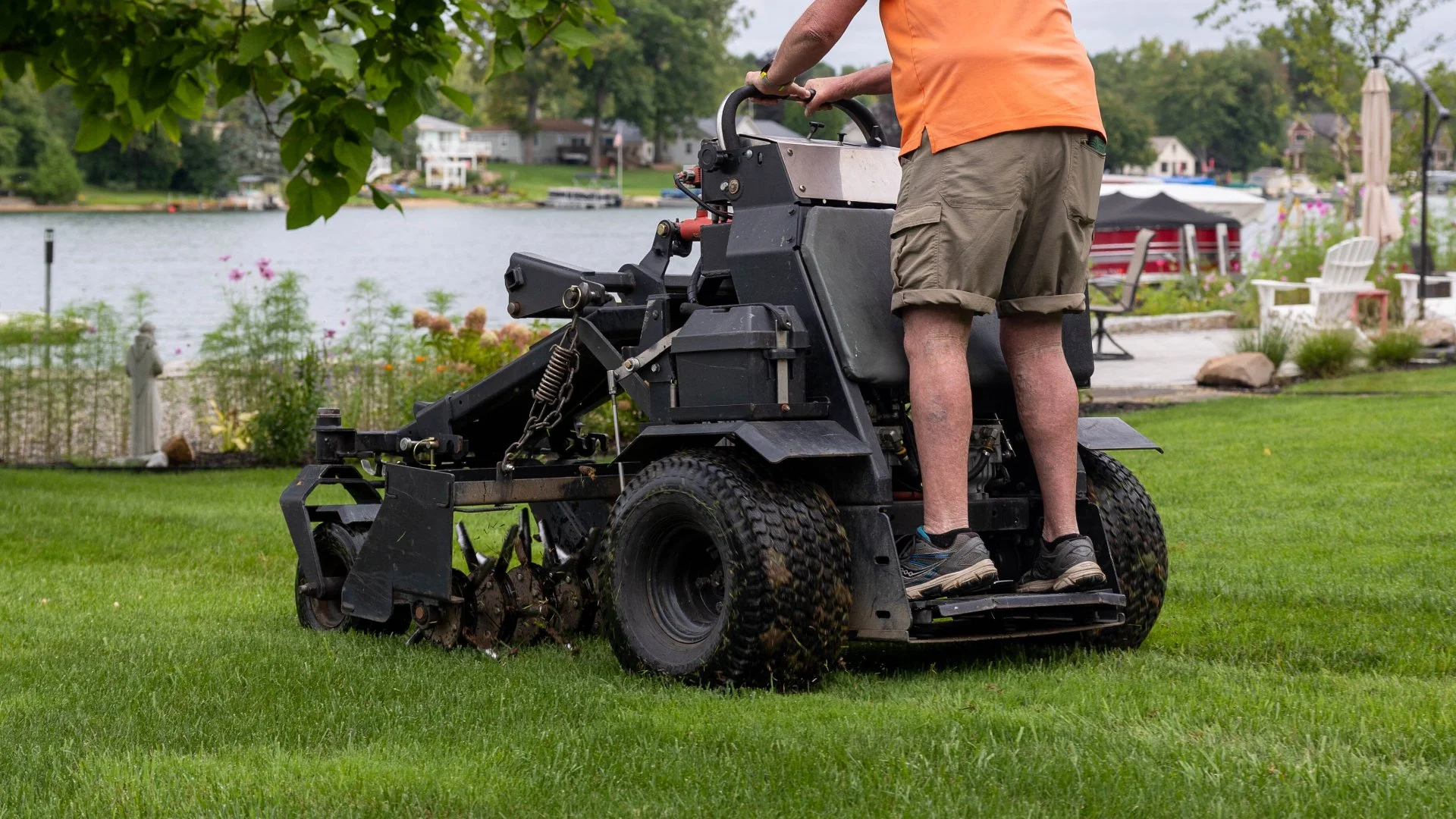
Core aeration removes small plugs from the lawn. It may be recommended when soil has become compacted from foot traffic, equipment, clay conditions, pets, repeated mowing, construction, outdoor events, rolling, or general use. We list core aeration as a separate lawn care service and specifically recommend it after rolling because the weight used to smooth the surface can also increase compaction. Aeration does not flatten a raised mole ridge immediately. Rolling does not create the openings that aeration creates.
A deep low spot needs another diagnosis
A lawn area several inches below the surrounding grade should not be treated as an ordinary rolling problem. Possible causes include a settled utility trench, decaying stump, washed-out soil, buried debris, drainage erosion, animal burrow, failed fill, broken underground pipe, construction settlement, or vehicle damage. A roller follows the surface. It cannot fill missing soil or correct the cause of settlement. Tell us about any excavation, tree removal, drainage work, irrigation repair, or construction history near the area. The property may need soil restoration, drainage work, or another landscape project outside the rolling scope.
Active mole control should be coordinated first
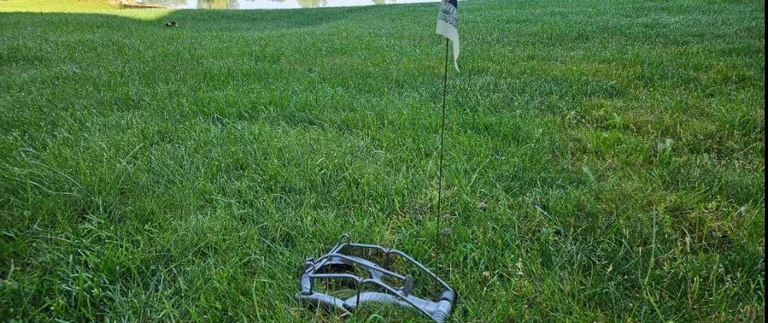
Our mole control programs use traps, bait, repellents, monitoring, and final trap collection across different visit schedules. Rolling an active tunnel can improve the surface briefly. A mole may continue creating new tunnels afterward. Before scheduling the roller, ask whether mole activity is current, which tunnels are fresh, whether a mole control program is active, whether traps are onsite, when traps will be checked, which areas the roller should avoid, whether rolling should wait until the final program visit, and how new activity will be monitored. Do not allow another contractor to roll over professional traps or markers.
Soil moisture affects the decision
A lawn that is saturated may be vulnerable to rutting, smearing, and additional compaction under heavy equipment. A lawn that is extremely dry may respond differently. Before the appointment, tell us about recent rain, irrigation, standing water, soft sections, drainage problems, recent snowmelt, spring seepage, a high water table, new sod, and recently seeded areas. We should determine when the lawn is suitable for our equipment. Do not irrigate heavily before rolling unless we provide that instruction.
Mark everything beneath the turf
Prepare the property map with irrigation heads, valve boxes, drain covers, invisible fence, lighting, utility covers, septic components, cleanouts, shallow wires, recently repaired areas, tree roots, new sod, mole traps, soft ground, and areas to exclude. A heavy roller can damage unmarked or protruding components. The same map will also be useful if aeration follows.
Rolling can change the mowing experience without fixing the lawn's health
A smoother surface can reduce mower bouncing and scalping over raised areas. That visual and functional improvement does not automatically correct thin turf, weeds, disease, grubs, poor fertility, incorrect pH, shade, drainage, drought, or compaction beneath the surface. We offer fertilization, weed control, aeration, disease management, insect control, grub control, lime, gypsum, and other lawn services as separate categories. The rolling report should identify what improved and what still needs another service.
Aeration should be scheduled deliberately
Ask how soon after rolling aeration should occur, which areas need aeration, whether the whole lawn is included, whether overseeding is planned, whether irrigation heads are marked, whether the lawn needs watering before or after, when mowing can resume, and which areas should remain excluded. The correct sequence depends on the property and seasonal plan. Our rolling page recommends aeration after rolling, but that does not mean both services must happen on every property or on the same day.
Photograph the surface from a low angle
An overhead photograph can hide bumps. Take images from lawn level before service. Include a straight walkway edge, fence line, mower path, raised tunnels, high spots, ruts, drainage areas, and deep settlement. Repeat the same photographs after rolling and later after aeration. This gives a clearer record of surface improvement and any areas that remain outside the scope.
Avoid repeated heavy rolling as routine maintenance
We publish lawn rolling as a specialized spring service during April and May, not as a normal recurring treatment throughout the year. When the same bumps return repeatedly, investigate the reason. The property may have active moles, drainage issues, a freeze-heave pattern, a soil problem, tree roots, repeated vehicle traffic, utility settlement, or another unresolved condition. The answer may be another rolling visit. It may also be a different repair.
Browse more West Michigan lawn guidance on the Tuff Turf blog, or reach us through the contact page. We have served West Michigan for more than thirty years, with offices in Byron Center and Holland, and can be reached at (616) 554-9499.
Need Professional Help?
Our experienced team is ready to help you achieve the lawn of your dreams. Contact us today for a free estimate!