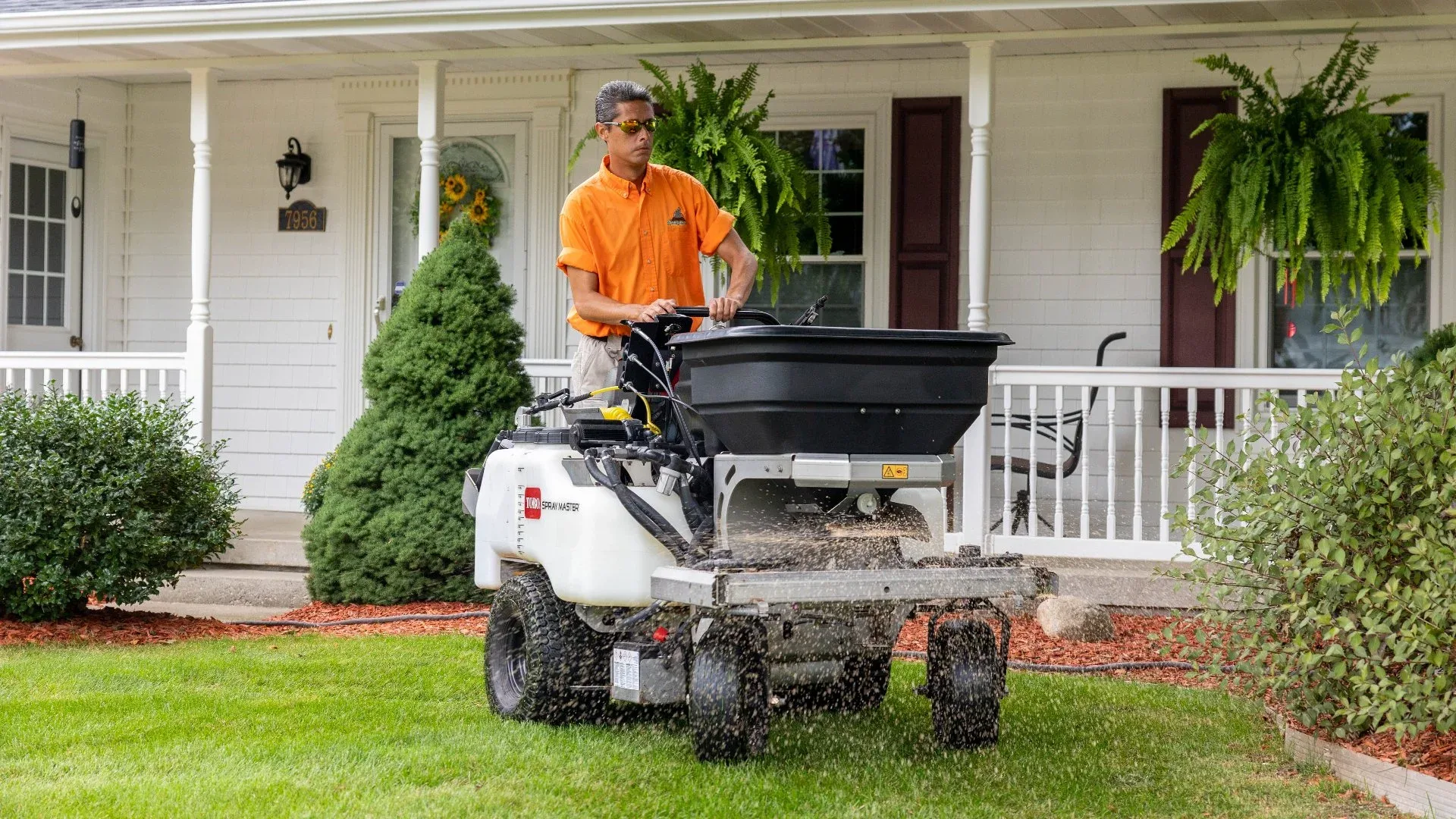
Mowing Height and Sharp Blades on Clay Lawns During Peak Heat
When the afternoons stack up hot and dry, most West Michigan homeowners reach for the sprinkler first. On heavy glacial clay, how you mow often matters more than one more watering cycle. Grass cut too short in a hot week loses the leaf tissue that shades its own roots, and a dull blade tears those tips so they brown and dry from the cut down. The lawn ends up working harder in the exact stretch when it can least afford to. Tuff Turf provides lawn care across Grand Rapids, Holland, Byron Center, and Rockford, and mowing habits are the first thing we talk through when clay turf struggles in July heat.
This is a practical guide to mowing cool season grass on clay when the heat holds: how high to set the deck, why blade sharpness shows up on the leaf tips, when to mow, and when height and blades are not the whole story. It pairs with our Byron Center and Rockford mid summer lawn guide when you want the full seasonal picture.
Why height beats extra water in a hot week
Taller grass shades its own crowns and the soil around them. On sunny clay margins beside pavement and brick, that shade slows evaporation and keeps root zones cooler than a scalped lawn ever will. Cut the same turf low and you expose the soil to direct afternoon sun, dry it out faster, and open bare ground for weeds to move into worn bands.
Kentucky bluegrass and perennial ryegrass blends handle heat better with a longer leaf. Before you raise every sprinkler zone because a strip looked dry at lunch, raise the deck instead and see how the lawn holds through the next few afternoons. For watering habits that fit clay, read watering during hot weather on clay soil rather than copying a lakeshore schedule on sand.
Set the deck for your grass, not the calendar
Cool season lawns in West Michigan do best on the taller side through peak heat, generally around three inches or a little more. Set the mower there and leave it for the hot stretch rather than dropping it for a tidy weekend photo. A short cut looks neat on Saturday and stressed by Wednesday when the heat pulls moisture from exposed soil.
Follow the rule of thirds: never remove more than the top third of the blade in one pass. If the grass got tall between mows, raise the deck, take a light cut, then mow again in a few days rather than scalping it back in one heavy pass. Sudden short cuts shock roots that were relying on that leaf for shade.
Sharp blades show up on the leaf tips
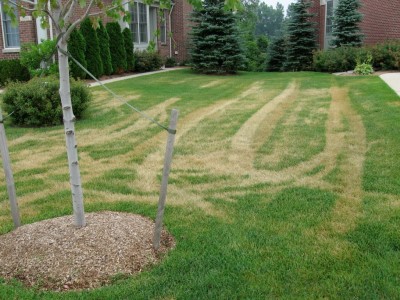
A sharp blade slices the leaf cleanly. A dull blade tears and shreds it, leaving a ragged edge that dries out and turns the whole lawn a hazy tan a day or two after mowing. That browning gets blamed on drought or disease when the real cause is the blade. Look closely at cut tips the morning after you mow. Clean cuts point one way, frayed white edges point to a blade that needs sharpening.
Torn tips also open more surface for moisture loss and for fungus to move in where shade and humidity linger. If greasy or ring shaped patches show up in shady corners after humid nights, that belongs in a lawn disease control conversation rather than another height change. Sharpen or swap blades through the season, since sandy grit and clay dull an edge faster than most people expect.
Mow when it is cooler and let clippings lie
Mow in the morning or the evening when grass is dry but the sun is not at its peak. Cutting in the hottest part of the afternoon stresses turf that is already losing moisture. Avoid mowing a lawn that is visibly wilting, since the wheels and cut add injury on top of heat.
Leave the clippings on the lawn when you take a light cut. Short clippings break down quickly, return nutrients, and lay a thin cooling layer over the soil surface. They do not cause thatch on a lawn mowed on a sensible rhythm. Clumps only pile up when the grass got too tall between mows, which is one more reason to keep a steady schedule through the heat.
When height and blades are not the whole story
Mowing habits protect turf, but they do not fix compaction or feed a hungry lawn. Gate paths, mower ruts, and play corners pack clay until water sheets off even when sprinklers run long. Plan core aeration when turf can heal rather than as a rescue pass before a gathering. Holiday traffic often sets up that pattern early; our lawn wear and heat recovery guide walks through it.
Color that fades evenly once water and height are right may point to nutrition. Structured lawn fertilization with weed control keeps feeding and weed pressure on rhythm, though heavy feed on drought stressed grass rarely helps in the middle of a hot week. When drought, disease, insects, and compaction all seem to compete, our mid summer lawn stress quiz helps you name which one to call about first.
Working with Tuff Turf
Photos of frayed tips, tan lawns a day after mowing, and worn paths help a technician sort mowing damage from thirst, disease, or wear. Note your current deck height, how often you mow, and when you last sharpened the blade. Confirm drive time on service areas when you schedule.
Peak heat on West Michigan clay rewards a steady mowing rhythm: a taller deck, a sharp blade, cooler cutting hours, and light clippings left to break down. Contact Tuff Turf at (616) 554-9499 for a free estimate when the lawn stays stressed after you fix height and coverage.
Need Professional Help?
Our experienced team is ready to help you achieve the lawn of your dreams. Contact us today for a free estimate!