Watering Your Lawn During Hot Weather on West Michigan Clay Soil
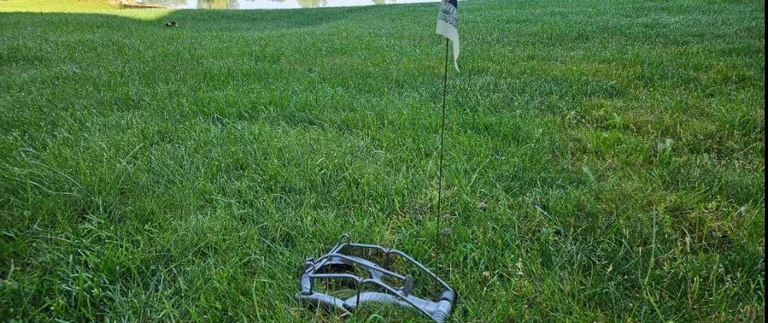
The first stretch of nights that no longer feel like spring on West Michigan clay is a turning point homeowners underestimate. Afternoons warm, growth jumps, and the sprinkler clock from last year wakes up before the soil has changed character. On heavy clay around Grand Rapids, Hudsonville, Zeeland, and Byron Center, that overlap between long warm stretches and automatic irrigation is where lawns look fine from the street while roots sit in waterlogged soil two inches down.
Why clay responds differently when warmth finally holds
Sandy pockets near Allendale and Spring Lake drain fast. Clay dominant lots hold water like a slow sponge. When soil finally warms and roots wake, they need air as much as moisture. Clay that stays wet loses pore space. Crowns green from stored carbohydrates while new roots stall in waterlogged soil. Compare your lot to your own sunny reference strip, not to a neighbor on sand three blocks away.
Walk the property after a warm week when grass is dry enough to leave only light prints. Note low corners that still shine with moisture forty eight hours after rain. Note south pavement edges that bake while the center strip looks soft. Those contrasts are normal on Michigan lots with driveways, downspouts, and fence shade. They are also where irrigation checks matters most.
irrigation checks before you copy peak summer habits
Short daily spritzes feel responsible when afternoons feel hot at four o'clock. On clay they train roots to stay shallow and make heat stress look like a feed failure later. Before you run the clock like peak summer, read when to start watering your lawn again in West Michigan. Finger test two inches down. If soil crumbles and grass springs back, wait. If footprints stay visible on turf that looks tired, one deep soak beats three shallow passes.
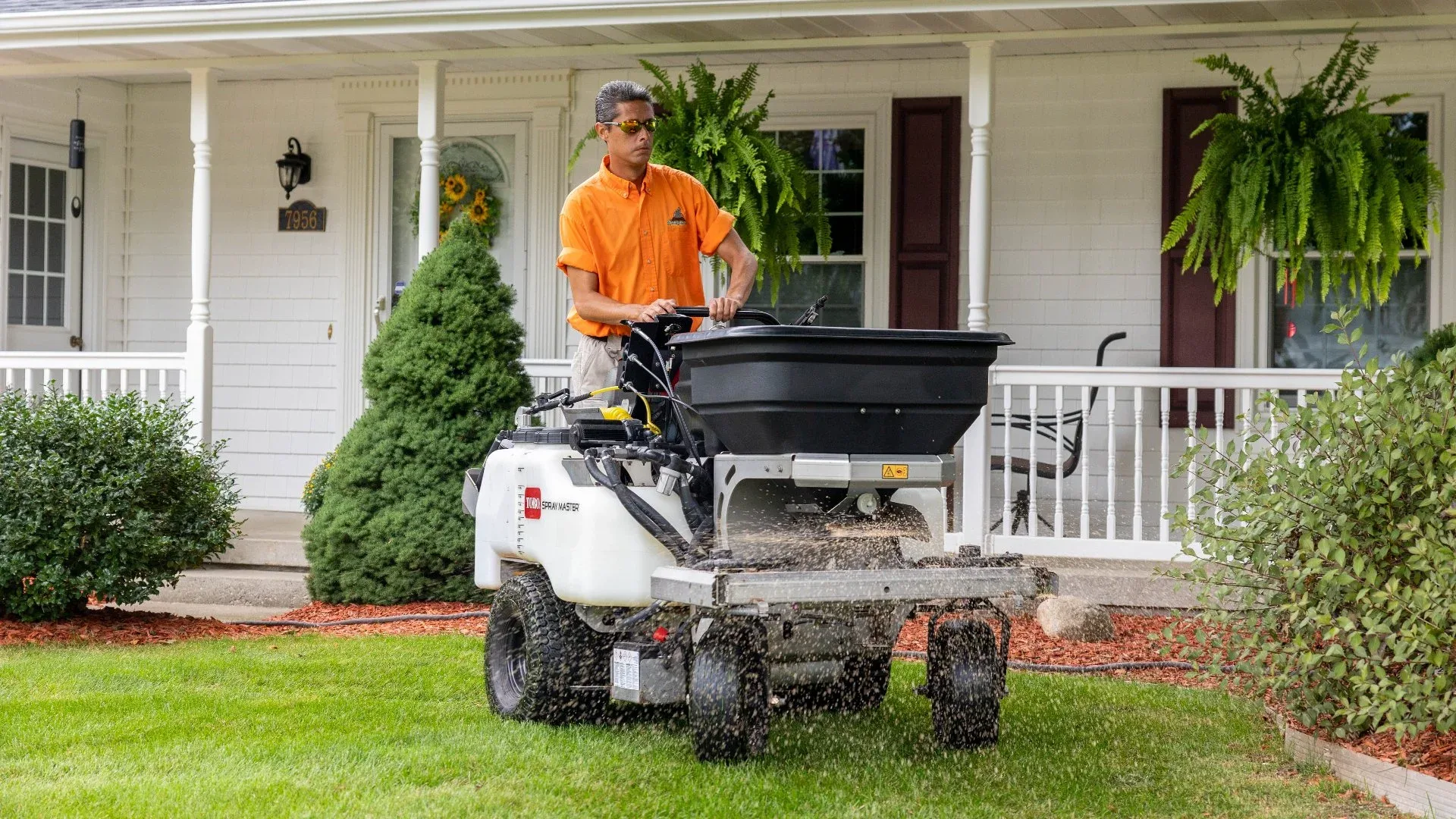
Uniform sprinklers across a lot with three microclimates usually waste water and stress grass. Heads that throw the same arc over a slope and a flat patio ignore gravity and compaction. Adjust zones for sun, shade, and clay hold instead of one timer for the whole address. Our lawn care visits layer lawn fertilization with weed control on rhythm tuned to West Michigan. Nutrition and water should move together when soil moisture makes sense.
Hot weather without overreacting to every pale strip
Pale bands in low corners can still be frost pocket lag while sunny strips jump ahead. Compare trouble only to similar sun and slope on your lot, the same habit we use in frost pockets and cool season lawns. Do not flood a lagging north face because the front yard looks ready for guests. Overwatering cool soil keeps roots cold longer and invites disease look alikes on humid nights.
Growth rate and guest schedules start arguing once warmth holds. Cool season lawns reward steady cuts that remove only the top third of the blade. Read late summer mowing rhythm on mixed turf when growth doubles in ten days. Mow again sooner instead of scalping to chase level stripes. Heavy clipping mats after a delayed mow shade crowns and hold moisture against clay that already drains slowly.
Compaction, aeration, and clay structure on the same calendar
Party traffic and mower wheels compress soil quietly on the same strips irrigation keeps wet. Footprints that stay visible can mean compaction as much as drought. Plan summer core aeration with your technician when turf can heal fast, not as an emergency scrape before guests arrive. Aeration opens pore space clay loses when warmth and water stack on the same weekend.
When drainage frustrates you after basics are stable, our gypsum overview explains how that amendment nudges clay toward crumbs without rewriting acidity in one stroke. Gypsum treatment belongs in conversation with feeding and aeration, not as a substitute for honest watering.
Moles, spongy strips, and stories that overlap on clay
Fresh ridges near patios can feel spongy underfoot while soil holds moisture from irrigation. Burrowing damage is mechanical. Compare surface patterns in mole hills or vole runways before you topdress on active runs. Spreading soil on movement buys a smooth afternoon and a bumpy midsummer. Pair honest identification with mole control under animal control before wide seeding on wet clay.
Soft soil from overwatering can attract burrowing activity near surface invertebrates. Fixing water rhythm often helps turf recover faster than another shallow soak. When several problems compete, which yard job to line up first helps order visits before you buy the wrong product twice.
Evening pests and perimeter habits when patios fill
Humidity rises when clay holds moisture and nights stay mild. Mosquitoes meet you at the railing where you meant to pour the first drink. Browse mosquito control and perimeter pest control under pest control when foundations and patios both matter. Skeeter dusk and backyard rhythm covers timing without mixing species stories on one panicked weekend.
Standing water in gutters, saucers under pots, and low swales that hold rain two days add breeding habitat. Breeding site cleanup pairs with professional perimeter work better than either alone. Keep birdbaths fresh and tip tarps so they do not cup water after storms pass.
Photos and notes that shorten the first visit
Wide shots of the yard plus close images of wet wedges and dry slopes save guesswork. Mark sunny versus shady zones on a rough sketch, note where the dog turns, and mention whether stress appeared after a warm spell or after irrigation started. Bring that packet when you contact us for a free estimate. Confirm drive time on service areas and browse services when lawn, pest, and animal work should share one calendar.
long warm stretches on West Michigan clay rewards irrigation checks: deep soaks when soil asks, patience in frost pocket lag, steady mowing height, and programs that respect heavy soil instead of copying sandy habits from the next neighborhood over. A calm late spring rhythm prevents the reactive rescue pass on the same lawn that looked ready from the street while roots sat in saturated clay below.
Need Professional Help?
Our experienced team is ready to help you achieve the lawn of your dreams. Contact us today for a free estimate!